Provo, UT · Garage Door Service
Provo Garage Door Co travels 15 miles to Highland for garage door repair and replacement, working on the newer torsion and insulated doors common to the area's 2000s-era homes.
We run trucks out of Provo, about 15 miles south of Highland, and Highland is inside our regular coverage. We don't keep a shop or a drop point in town - every job starts with a drive up, so a same-day call depends on where the truck already is that morning. If you need a part ordered, expect that to add a day or two on top, same as anywhere else we cover. What we can tell you is that we know this stretch of homes well enough to guess what's wrong before we open the panel, because Highland's housing stock is different from most of the rest of our service area, and that difference matters more than the drive time does.
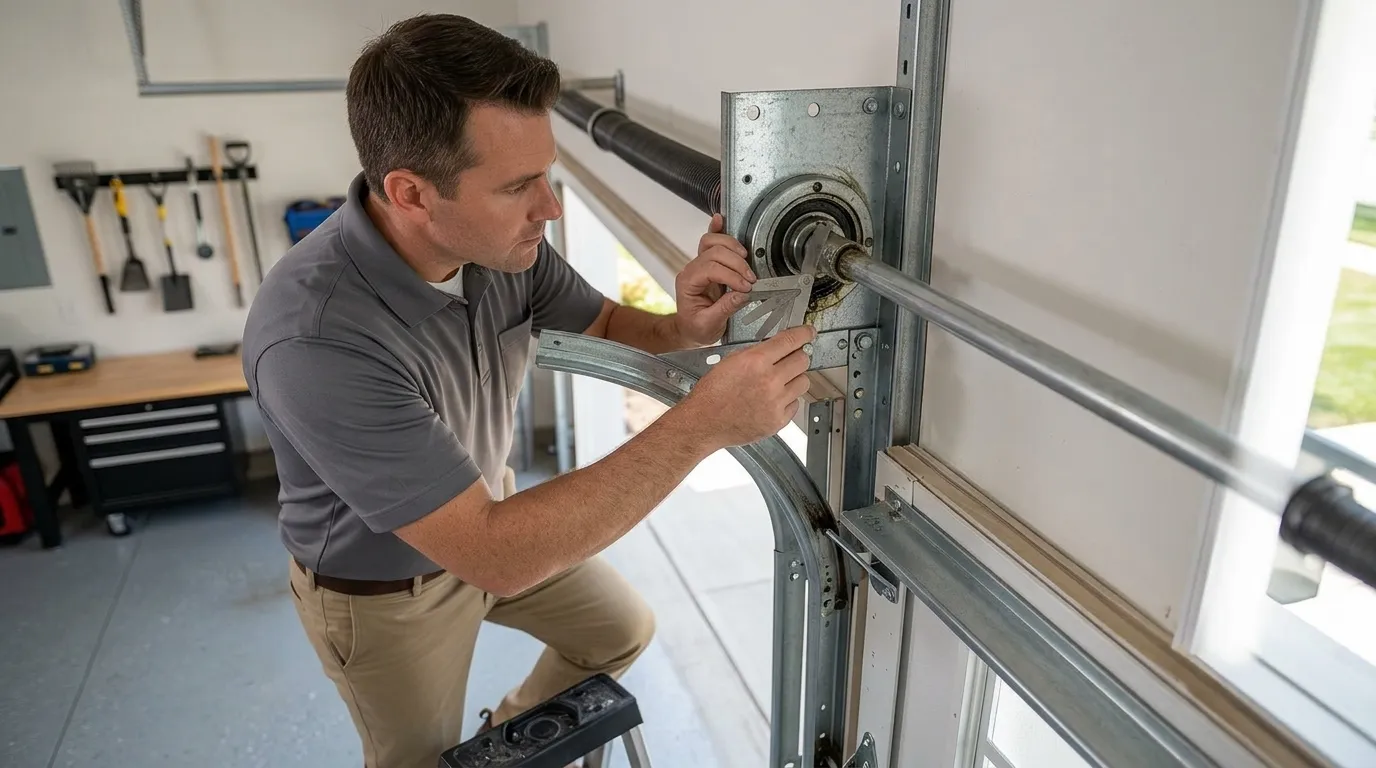
Highland's median home was built around 2004, roughly six years newer than the median across our full coverage area (1998) and a couple decades newer than the older pockets closer to Provo. That means most doors here are original steel or composite panel doors on standard-lift torsion springs, installed to specs that were already leaning toward better insulation and quieter openers than the doors going up in the 1980s. You're less likely to be fighting an obsolete opener chain drive and more likely dealing with a torsion spring that's simply reached the end of its cycle count, a worn extension roller, or a sensor alignment issue on a door that's otherwise solid. Highland's median household income, at $178,662, is well above the roughly $107,617 median across the wider area, and it shows in the doors - heavier insulated panels, better weatherstripping, openers with battery backup rather than bare-bones units. That's good news for repair calls: the hardware is usually worth fixing rather than replacing outright, because the door underneath it is younger and better built than what we see closer to the older neighborhoods.
With about 4,787 households in Highland, most sitting in homes from the early-to-mid 2000s building wave, you get a fairly uniform set of door styles and opener generations across the area - which makes diagnosis faster than in a mixed-era neighborhood. This region falls in a cold, severe climate band, so doors and openers here were built and installed with winter in mind: better door seals, springs rated for the swings between summer heat and hard winter cold, and openers less likely to freeze up than units installed decades earlier without cold-weather gaskets. That doesn't mean nothing fails. Cold snaps still stiffen lubricant in torsion springs and can make a slow-closing door look like a sensor problem when it's really just grease gone thick. It's one of the few things a newer, better-built door can't fully engineer around.
From Highland, the calls tend to run toward openers losing connection with wall units, torsion springs that have finally worn out after normal cycling, and rollers or hinges rattling loose on doors that are otherwise fifteen to twenty years old - old enough for wear, young enough that replacement is rarely the first move. We also get calls about insulated panels that have started to sag or bow, usually on double-wide doors, which is a panel-and-hardware fix more often than a full door swap. One honest note: if your opener is original to a 2004-era build, parts for that specific model may already be discontinued, and depending on what's broken, a new opener can end up cheaper and faster than hunting down a matching board or gear kit. We'll tell you straight which way that math goes before we start.
No. We work out of Provo, about 15 miles south, and drive up for every Highland job. There's no local depot, so scheduling depends on truck routing that day rather than a fixed local response time.
Yes. Highland's median home was built around 2004, newer than the roughly 1998 median across our coverage area, so most doors here are original torsion-spring setups with better insulation than the older extension-spring doors common in 1980s-90s neighborhoods elsewhere.
Sometimes. If your opener is original to a 2004-era build and the part that failed is a discontinued board or gear kit, a new opener can cost less and take less time than sourcing an exact match. We'll price both before recommending either.
It can. This area sits in a cold, severe climate band, and even a well-built 2000s-era door can slow down in a hard freeze as grease in the torsion spring thickens. It often looks like an opener or sensor fault but is really just cold hardware.
Call now or request a free quote - same-day service on most repairs, upfront written pricing.